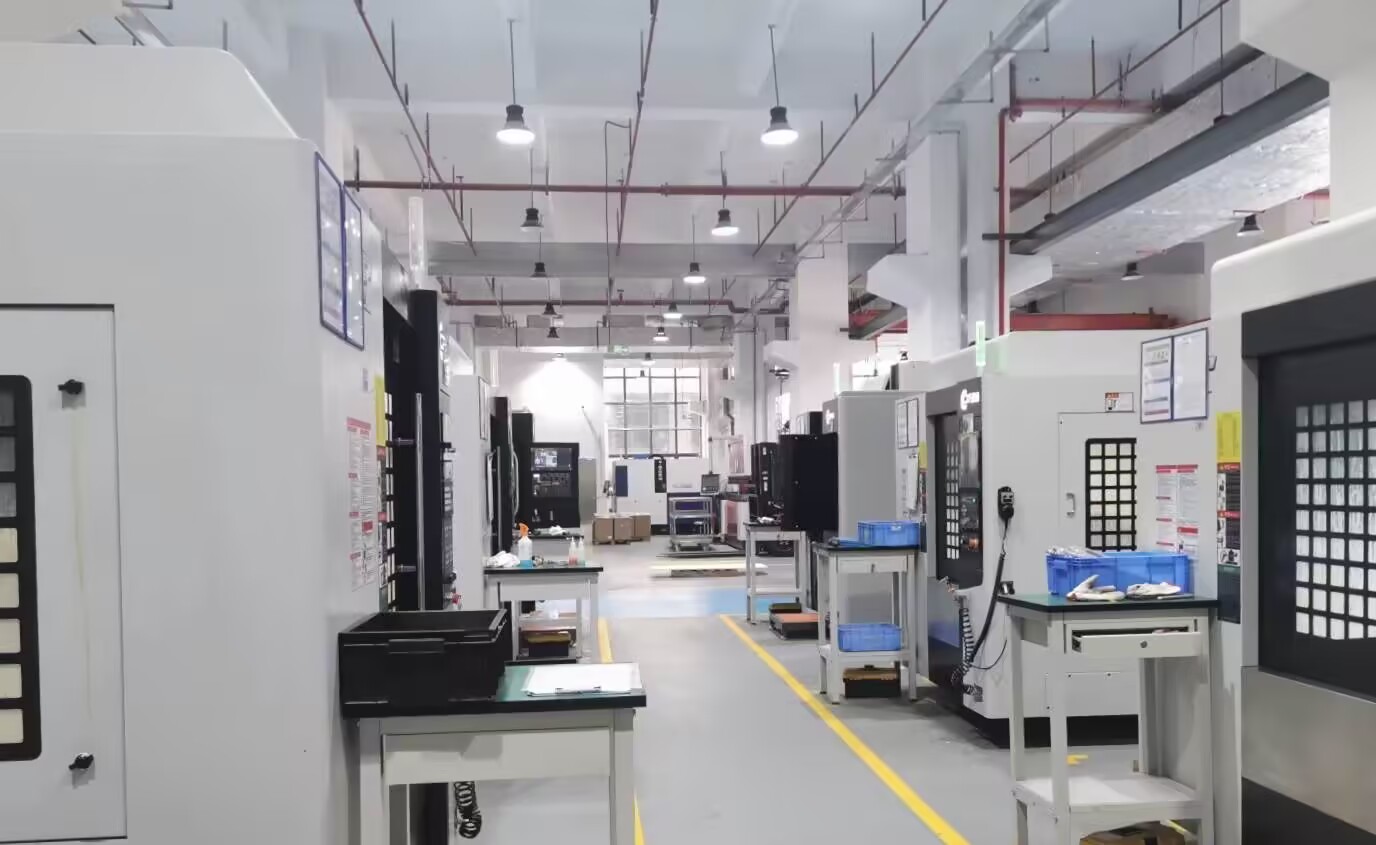
China is one of the most practical sourcing regions for CNC machined prototype parts, small-batch custom components, aluminum brackets, mounting plates, adapter parts, housings, fixtures, and drawing-based hardware.
For robotics projects, CNC machining is often used when standard parts are not enough. A robot prototype may need a custom motor bracket, a sensor mount, a reducer adapter plate, a gripper part, a camera holder, a cable guide, or a small housing that fits a specific assembly.
The value of China CNC machining is not that every supplier can handle every high-end precision part. The value is the size of the manufacturing base, the variety of machining suppliers, the availability of materials and surface treatments, and the ability to compare multiple supplier options for low-volume and sample-stage parts.
For teams sourcing robot prototype parts from China, the main question is not only "Can this part be made?" A more practical question is:
Can the supplier understand the file, quote the right material and tolerance, handle the sample quantity, confirm surface treatment, and support follow-up before production?
This guide explains how China CNC machining can support robot prototype parts, what types of parts are suitable, what files and specifications are needed, and how to prepare a clear CNC RFQ.
1. Why China CNC machining is useful for robot prototype parts
Robot prototypes often require custom mechanical parts before the design is ready for production. These parts may not be available as standard components, but they can often be made from drawings, STEP files, STL files, samples, or reference dimensions.
China CNC machining is useful for this kind of sourcing because many suppliers can support:
- Low-volume CNC machining
- Aluminum prototype parts
- Small-batch robot brackets
- Mounting plates
- Adapter blocks
- Sensor holders
- Motor mounts
- Reducer plates
- Gripper components
- Robot accessory parts
- Test fixtures
- Housings and covers
- Drawing-based custom hardware
For robotics component sourcing, CNC machining fills the gap between standard parts and production tooling. It allows a design to be tested, assembled, adjusted, and improved before larger quantities are considered.
This is especially useful when the buyer already has files, drawings, samples, or a clear reference part.
2. What types of robot parts are suitable for CNC machining
CNC machining is often suitable for rigid parts that need dimensional accuracy, strength, clean edges, threaded holes, mounting features, or stable assembly fit.
Common robot-related CNC parts include:
- Motor brackets
- Servo motor mounting plates
- Reducer adapter plates
- Actuator mounting blocks
- Sensor brackets
- Camera holders
- LiDAR mounting plates
- Gripper fingers
- Gripper bases
- Robot arm connector plates
- End-effector adapter parts
- Cable routing guides
- Battery mounting plates
- Protective covers
- Test fixtures
- Prototype housings
- Small robot accessories
These parts are often used in robot joints, mobile robots, robotic arms, grippers, inspection robots, research platforms, automation modules, and early hardware prototypes.
CNC machining is most practical when the part geometry is clear and the supplier can review the file before quotation.
3. Shenzhen, Dongguan, and the Greater Bay Area in CNC sourcing
Shenzhen is widely associated with electronics, hardware development, and fast product iteration. For CNC machining, nearby manufacturing areas such as Dongguan, Guangzhou, Foshan, Huizhou, and Zhongshan also matter.
The Greater Bay Area can be useful for robot prototype part sourcing because it connects several related supplier categories:
- CNC machining shops
- Sheet metal suppliers
- Surface treatment providers
- Cable and connector suppliers
- Electronics suppliers
- Small hardware suppliers
- Assembly support suppliers
- Prototype service providers
A robotics project may need CNC parts together with motors, cables, connectors, sensors, or small electronic modules. Having these supplier categories within a connected regional supply chain can make sourcing and follow-up more practical.
The point is not that every CNC supplier is in Shenzhen. The point is that Shenzhen can work as a China-side sourcing and communication base connected to nearby machining and hardware supply chains.
4. Low-volume CNC machining and sample orders
Many robot prototype parts start with low quantities. A buyer may need 1 piece, 3 pieces, 5 pieces, 10 pieces, or 20 pieces before deciding whether to revise the design.
Low-volume CNC machining is useful for:
- Fit testing
- Assembly testing
- Engineering validation
- Early product demos
- Lab builds
- Small-batch hardware projects
- Robot accessory samples
- Pre-production mechanical parts
However, low-volume CNC machining is not the same as mass production pricing. The first sample batch may have a higher unit price because programming, setup, tool preparation, machine time, and inspection are spread across a small quantity.
Before asking for a quote, it helps to state:
- Initial sample quantity
- Expected later quantity
- Whether design revision is expected
- Whether the part is for functional testing
- Whether appearance matters
- Whether repeat orders may follow
A clear quantity plan helps suppliers quote more accurately and decide whether the request fits their production workflow.
5. CNC suppliers usually need clear files
CNC suppliers usually quote best when the buyer provides clear technical files.
Useful files may include:
- STEP files
- STL files
- PDF drawings
- DWG files
- DXF files
- 2D sketches
- Assembly drawings
- Reference photos
- Existing sample photos
A STEP file is often useful because it gives the supplier the 3D geometry. It helps the supplier check shape, pockets, holes, edges, thickness, and machining complexity.
A PDF drawing is useful because it explains what the STEP file does not fully define. It can show critical dimensions, tolerance requirements, threaded holes, surface finish, material, revision notes, and inspection requirements.
For many CNC parts, a STEP file and a 2D PDF drawing together are better than either file alone.
6. Material selection affects price and performance
Material is one of the first things a CNC supplier needs to know.
Common materials for robot prototype parts include:
- Aluminum 6061
- Aluminum 6063
- Aluminum 7075
- Stainless steel
- Carbon steel
- Brass
- Copper
- POM
- Nylon
- ABS
- Other engineering plastics
Aluminum is common for robot brackets, adapter plates, and mounting parts because it is lightweight and machinable. Aluminum 6061 is often used for general prototype parts. Aluminum 7075 may be considered when higher strength is needed.
Steel or stainless steel may be used when strength, stiffness, wear resistance, or corrosion resistance is more important than weight.
Engineering plastics may be used for lightweight fixtures, insulating parts, low-load accessories, or non-metal prototype components.
If the exact material is not fixed, the RFQ can say so. Suppliers may suggest available alternatives, but the buyer should confirm whether the substitute material is acceptable for the application.
7. Tolerances should match the function of the part
Tolerance directly affects CNC machining cost, production difficulty, inspection time, and supplier selection.
For robot prototype parts, not every dimension needs tight tolerance. Some features are critical, while others can use general machining tolerance.
Critical features may include:
- Motor mounting holes
- Reducer mounting surfaces
- Bearing seats
- Shaft clearance
- Sensor alignment holes
- Threaded holes
- Flat mounting surfaces
- Assembly interface dimensions
- Locating pins or slots
Non-critical outer dimensions may not need strict tolerance. Over-specifying tolerance can increase cost and lead time without improving the practical function of the part.
A good CNC RFQ should separate critical dimensions from general dimensions.
For example:
- Mounting hole positions are critical.
- Motor mounting surface flatness is important.
- Outer profile can follow general machining tolerance.
- Cosmetic surfaces should be clean but do not need tight dimensional tolerance.
This helps the supplier quote the right machining scope.
8. Threaded holes and mounting features need special attention
Robot brackets and adapter plates often include threaded holes, counterbored holes, countersunk holes, slots, or inserts.
Before quotation, clarify:
- Thread size
- Thread depth
- Blind hole or through hole
- Countersink requirement
- Counterbore requirement
- Insert requirement
- Screw type
- Slot dimensions
- Hole position tolerance
- Whether thread inspection is required
Small errors in threaded holes can make a prototype part unusable during assembly. For robot hardware, mounting details often matter more than the outer shape of the part.
If the part connects to an existing motor, reducer, sensor, or frame, include the related mounting dimensions when possible.
9. Surface treatment should match the prototype stage
Surface treatment affects appearance, corrosion resistance, wear resistance, and cost.
Common options include:
- Natural machined finish
- Anodizing
- Black anodizing
- Hard anodizing
- Sandblasting
- Brushing
- Polishing
- Powder coating
- Painting
- Zinc plating
- Nickel plating
For early prototype testing, a natural machined finish may be acceptable if speed and cost matter more than appearance. For customer-facing prototypes, demo units, or visible robot accessories, anodizing or a cleaner finish may be preferred.
The RFQ should state whether the part is for internal testing, assembly verification, demo use, or final appearance review.
This helps suppliers avoid quoting an unnecessary finish or missing an important surface requirement.
10. CNC quotation is not only about unit price
Two CNC quotations may look similar, but they may include different scopes.
Before comparing price, check whether the quotation includes:
- Material
- Machining
- Surface treatment
- Thread processing
- Deburring
- Inspection
- Packaging
- Domestic shipping
- International shipping
- Sample setup cost
- Drawing review
- Special tolerance requirements
A lower price may not include surface treatment, inspection, or careful tolerance control. A higher price may include more complete processing and better communication.
For robot prototype parts, the cheapest quote is not always the most useful quote. The better question is whether the supplier understands the file, confirms the material, identifies unclear details, and provides a realistic lead time.
11. How to compare China CNC supplier replies
When comparing CNC supplier responses, review more than the quoted price.
Useful comparison points include:
- Did the supplier review the STEP file or drawing?
- Did they confirm material?
- Did they mention surface treatment?
- Did they ask about tolerance or critical dimensions?
- Did they confirm quantity?
- Did they provide sample lead time?
- Did they mention manufacturability issues?
- Did they clarify threaded holes?
- Did they include packaging or inspection?
- Can they support repeat orders?
- Is communication clear enough for follow-up?
A supplier who asks useful technical questions may be more valuable than a supplier who gives a fast but vague quote.
For robot prototype parts, clear communication can reduce wrong assumptions before machining starts.
12. Common problems in CNC sourcing
CNC sourcing problems often come from unclear files or missing requirements.
Common issues include:
- STEP file without material information
- STL file without tolerance notes
- PDF drawing without thread details
- Unclear surface treatment
- Missing quantity
- No explanation of critical dimensions
- Tight tolerance applied to all dimensions
- No assembly context
- No sample purpose
- No revision control
- No confirmation of finish or color
These problems can lead to inaccurate quotes, production delays, wrong parts, or repeated supplier questions.
A clean RFQ package helps avoid these issues.
13. What to prepare before asking for a CNC quote
A practical CNC RFQ package for robot prototype parts should include:
- STEP file
- PDF drawing
- Material requirement
- Surface treatment
- Quantity
- Critical tolerance notes
- Thread details
- Assembly context
- Reference photos if available
- Sample purpose
- Expected lead time
- Delivery country
- Questions for the supplier
The RFQ does not need to be long. It needs to be clear enough for the supplier to understand the part, quote the right scope, and identify missing information.
Example CNC RFQ for a robot prototype part
A clear CNC RFQ may look like this:
Part:
Prototype motor mounting bracket for a robot joint test assembly.
Files:
STEP file and PDF drawing attached.
Material:
Aluminum 6061.
Surface treatment:
Black anodizing preferred. Natural machined finish is acceptable for first sample if faster.
Quantity:
Initial sample quantity: 5 pieces.
Possible later batch: 30-50 pieces after fit testing.
Critical requirements:
Mounting hole positions and flatness of the motor mounting surface are important. Other dimensions can follow general machining tolerance unless otherwise noted.
Assembly context:
The bracket connects a compact motor assembly to a test frame. Reference photos and motor mounting dimensions are attached.
Questions:
Can you quote sample production?
What is the lead time?
Do you see any machining issues?
Can you provide inspection photos before shipment?
Is there a cost difference between natural finish and black anodizing?
This type of RFQ is easier for suppliers to answer than a short message that only says "Please quote this CNC part."
When China-side CNC sourcing support can help
China-side CNC sourcing support may be useful when:
- STEP files or drawings are available
- Several CNC suppliers need to be compared
- The part is for a robot prototype or small-batch build
- Material, tolerance, or surface treatment needs clarification
- The request includes brackets, adapter plates, housings, sensor holders, motor mounts, or robot accessories
- Supplier replies are incomplete or difficult to compare
- Sample order details need to be clarified before production
The goal is to help organize supplier communication, compare practical CNC supplier options, and reduce quotation friction before placing a sample order.
FAQ
Can China CNC suppliers make small-batch robot prototype parts?
Yes, many CNC suppliers in China can quote small-batch prototype parts, but pricing depends on material, quantity, machining complexity, tolerance, surface treatment, and lead time. Very small quantities often have higher unit prices because setup and programming costs are spread across fewer parts.
What files are needed for CNC machining in China?
A STEP file is useful for 3D geometry, while a PDF drawing is useful for tolerances, threaded holes, material, surface finish, and critical dimensions. Reference photos, assembly context, and sample quantity can also help suppliers quote more accurately.
Is CNC machining suitable for robot brackets and mounting plates?
Yes. CNC machining is commonly used for robot brackets, motor mounts, reducer plates, sensor holders, adapter parts, gripper components, housings, and small custom hardware parts when clear files and dimensions are available.
What material is commonly used for robot prototype CNC parts?
Aluminum 6061 is commonly used for many prototype brackets and mounting parts because it is lightweight and machinable. Aluminum 7075, stainless steel, carbon steel, brass, POM, nylon, and other materials may also be used depending on strength, weight, wear, insulation, and cost requirements.
How should CNC supplier quotations be compared?
CNC quotations should be compared by material, tolerance, surface treatment, lead time, sample support, inspection, communication clarity, and whether the supplier understands the file. Unit price alone is not enough.
Conclusion
China CNC machining is useful for robot prototype parts because it offers broad supplier coverage, material options, surface treatment support, and low-volume machining capability. For robotics projects, CNC parts may include brackets, mounting plates, adapter blocks, housings, fixtures, sensor holders, motor mounts, and robot accessories.
The best results usually come from clear sourcing materials. STEP files, PDF drawings, material requirements, tolerance notes, thread details, surface treatment, quantity, and assembly context all help suppliers quote more accurately.
For robot prototype sourcing, CNC machining should not be treated as a simple price request. The supplier needs to understand the file, the critical features, the sample stage, and the manufacturing scope.
If you have STEP files, STL files, PDF drawings, product photos, sample parts, or target specifications for robot prototype CNC parts, you can send the details to ZuTaoHub. ZuTaoHub can help look for practical China CNC machining supplier options and support quotation communication for small-batch robot hardware.
contact@zutaohub.com