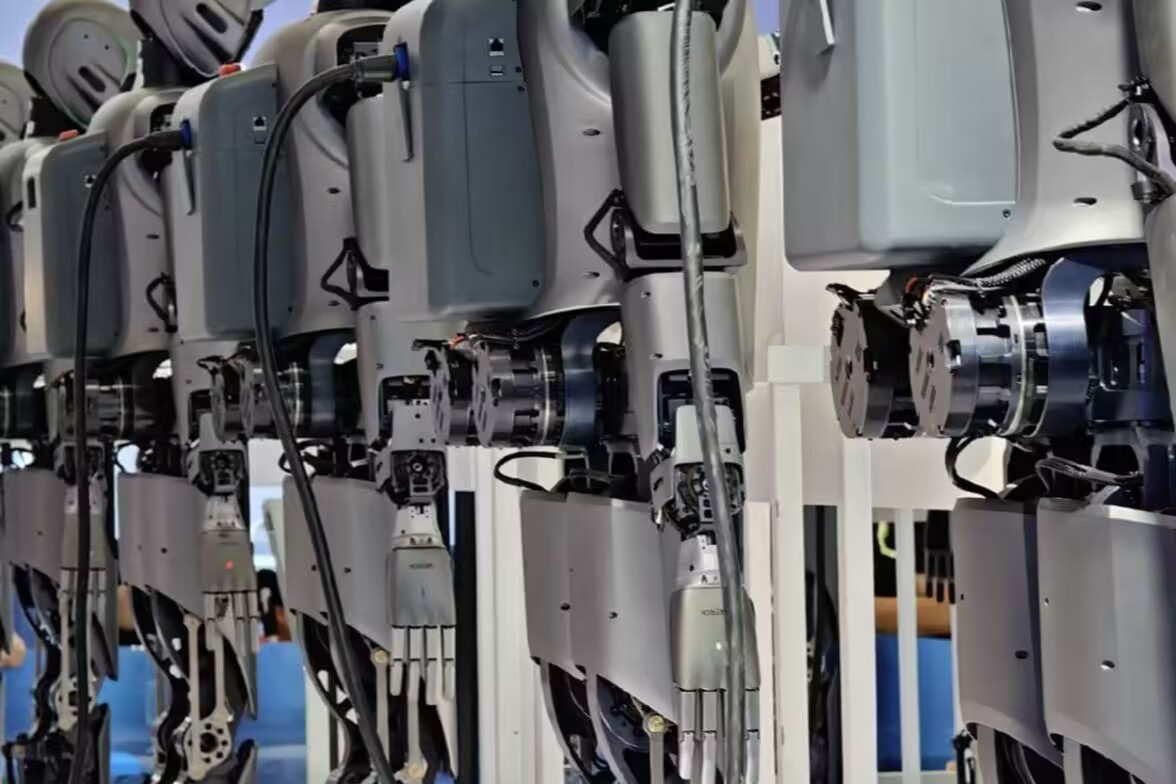
Robotics teams sourcing robot accessories should first clarify whether the request is for a standard part, a close-fit alternative, a lightly customized item, or a drawing-based custom component. Photos, sketches, dimensions, mating part information, function descriptions, and sample quantity can help suppliers understand the right sourcing path before quotation.
In robotics projects, "accessory" can mean many different things. It may refer to a sensor mount, cable holder, connector cover, protective cap, adapter plate, small bracket, robot frame add-on, end-effector accessory, housing part, fixture, or a component used around motors, actuators, sensors, controllers, and moving structures.
Some accessories can be sourced as standard parts. Some can be matched with close-fit options. Some need light customization, such as a changed hole position, length, connector, surface finish, or label. Others must be made from drawings, CAD files, or physical samples.
This guide explains how robotics teams, hardware teams, engineering teams, and buyers sourcing from China can organize robot accessory requests before supplier communication.
What counts as a robot accessory?
A robot accessory is usually not the main motor, reducer, controller, or sensor, but it can still be important for assembly, routing, mounting, protection, testing, or integration.
Common robot accessory examples include:
- sensor brackets
- mounting plates
- adapter plates
- cable holders
- wire clips
- connector covers
- protective caps
- small housings
- end-effector accessories
- camera mounts
- LiDAR or sensor mounts
- battery holders
- actuator mounting parts
- robot frame add-ons
- small CNC brackets
- test fixtures
- internal support parts
- protective covers
- custom labels or marked parts
- small assembly hardware
These items can look simple, but sourcing them is not always simple. A supplier may need to know whether the buyer wants an existing standard item, a similar available option, a small modification, or a part made from a drawing.
The first task is not to choose a supplier immediately. The first task is to clarify the request type.
Why the sourcing path matters
A robot accessory request can follow different sourcing paths. Each path has different quotation logic, lead time, MOQ, and information requirements.
A standard part may only need a model number, size, quantity, and target use. A close-fit option may need dimensions, photos, and flexibility notes. A lightly customized item may require a sketch, key dimensions, and modification details. A drawing-based part may require a PDF drawing, STEP file, material, surface finish, tolerance notes, and sample quantity.
If the sourcing path is unclear, suppliers may respond with vague questions or unsuitable options. For example, a buyer may send a photo of a small bracket and ask for a quote. One supplier may search for a standard bracket. Another may quote CNC machining. Another may ask for a drawing. Without clarification, these replies are hard to compare.
A clear request helps suppliers understand whether they should search, match, modify, or manufacture.
When a robot accessory can be treated as a standard part
A request can be treated as a standard part when the accessory already exists as a known product, has a standard size, or follows a common specification.
Examples may include:
- standard fasteners
- common cable clips
- standard connector caps
- DIN rail accessories
- standard sensor brackets
- standard camera mounts
- common bearings or spacers
- standard cable glands
- off-the-shelf protective covers
- standard robot accessory hardware
For standard parts, buyers should provide:
- model number if available
- brand preference if any
- size or key dimensions
- material requirement if relevant
- quantity
- target use
- whether compatible alternatives are acceptable
If an exact model is required, that should be stated clearly. If a compatible alternative is acceptable, suppliers can search more widely.
A standard part is usually easier to quote, but only if the requirement is specific enough. A request such as "sensor bracket" is too broad. A better request would include mounting hole distance, sensor diameter, material, expected load, and photo or drawing reference.
When a close-fit option may be better
A close-fit option is useful when the buyer does not need an exact part, but needs something that is similar enough in function, size, interface, or mounting style.
This is common in early robot prototypes. A robotics team may not need the exact same accessory used in the final production design. They may only need a part that works for testing, assembly, routing, or validation.
Close-fit options may be suitable when:
- the exact model is unknown
- the part is used for prototype testing
- several similar sizes could work
- the mounting method has some flexibility
- the buyer can adjust surrounding parts
- the accessory is not a critical precision component
- the goal is to compare available supplier options
For close-fit sourcing, buyers should clarify which requirements are fixed and which are flexible.
For example:
Fixed:
M12 connector compatibility, 600 mm cable length, black jacket
Flexible:
connector brand, cable outer diameter, label format
Or:
Fixed:
mounting hole distance, aluminum material, approximate bracket shape
Flexible:
surface finish, corner radius, non-critical outer dimensions
This helps suppliers avoid unnecessary custom work when a near-standard option may be enough.
When light customization is suitable
Light customization sits between standard sourcing and full custom manufacturing. It is useful when an existing part is close to the requirement but needs small changes.
Examples of light customization include:
- changing cable length
- changing connector type
- changing pinout
- adding a label
- changing surface finish
- changing hole position
- changing bracket length
- adding a small slot
- changing color
- adding heat shrink
- changing packaging
- adjusting a simple mounting feature
Light customization can be practical for prototype and small-batch work, but it still requires clear information. Buyers should not assume that small changes are automatically easy. A changed hole position may require CNC machining. A changed cable connector may require connector sourcing and pinout confirmation. A changed surface finish may affect lead time and MOQ.
For lightly customized items, buyers should provide:
- the base part or reference product
- the requested change
- dimensions of the changed area
- photos or sketch
- sample quantity
- acceptable tolerance if relevant
- whether the change is required or preferred
- whether an alternative suggestion is acceptable
The key question is whether the modification can be made from an existing item or whether it becomes a drawing-based custom part.
When a drawing-based custom part is needed
Some robot accessories cannot be sourced as standard or close-fit parts. They need to be made from a drawing, CAD model, or physical reference.
Drawing-based custom parts may include:
- CNC mounting brackets
- adapter plates
- robot frame connectors
- sensor mounting structures
- actuator support parts
- custom housings
- protective covers
- small aluminum parts
- fixture components
- special cable routing plates
- end-effector support parts
These parts usually require more complete information than standard accessories.
Buyers should prepare:
- PDF drawing
- STEP file if available
- material
- surface finish
- tolerance notes
- threaded hole information
- critical dimensions
- sample quantity
- target use
- photos of the assembly position if useful
A STEP file helps suppliers understand geometry, but a PDF drawing is still useful for dimensions, tolerances, holes, threads, and surface finish. Photos can help explain context, but they usually cannot replace drawings for custom manufacturing.
For early-stage prototypes, the drawing does not always need to be perfect. However, suppliers need enough information to understand the shape, material, quantity, and manufacturing method.
Photos are useful, but they are not enough
Photos are often the starting point for robot accessory sourcing. They help suppliers understand the object, shape, surface, connector, mounting position, or assembly context.
Useful photos include:
- front view
- side view
- back view
- close-up of holes or connectors
- photo with ruler or caliper
- photo of the part installed in the robot
- photo of mating parts
- photo of labels or markings
- photo of damaged or old sample part
However, photos alone are usually not enough for accurate quotation. A photo does not reliably show dimensions, material, tolerance, thread type, surface finish, or internal structure.
Photos are best used together with dimensions, drawings, sketches, or model numbers. If the buyer only has photos, the RFQ should clearly state that the request is an initial identification or matching discussion, not a final production-ready quote.
Sketches and dimensions can clarify the request
A simple sketch can be very useful, especially for early-stage robot accessory sourcing.
The sketch does not need to be a professional engineering drawing at the first discussion stage. It can show:
- overall length
- width
- height
- hole diameter
- hole distance
- connector location
- cable exit direction
- mounting surface
- bending direction
- branch or split point
- critical clearance
- mating part position
For many small accessories, a rough sketch plus photos is enough for suppliers to decide whether the request is standard, close-fit, lightly customized, or custom.
Dimensions are especially important when the accessory must fit inside a robot body, near a joint, next to a sensor, or around a moving structure. Space constraints should be stated clearly.
Function descriptions help suppliers understand alternatives
A robot accessory is not only a shape. It has a function.
Suppliers may offer better options if they understand what the part needs to do. A short function description can help them decide whether a standard or close-fit option may work.
Useful function descriptions include:
- holds a sensor on a robotic arm
- routes cables inside a mobile robot chassis
- protects a connector during movement
- supports a camera module
- adapts a motor to a test fixture
- fixes a cable near a moving joint
- covers a small electronic module
- mounts an accessory on an aluminum frame
- connects two structural parts in a prototype
This does not mean suppliers need to know the full robot design. They only need enough context to understand the accessory's role.
For example, a cable holder used in a fixed control box is different from a cable holder near a moving joint. A protective cover used indoors is different from one exposed to dust, oil, or repeated handling.
Mating parts should be identified when possible
Many robot accessories must fit another component. That component is the mating part.
Mating parts may include:
- sensors
- connectors
- motors
- reducers
- actuators
- aluminum profiles
- camera modules
- controller housings
- robot frame parts
- cable assemblies
- end-effector parts
If the accessory must fit a mating part, buyers should provide the mating part model, drawing, photo, or key dimensions. Without this information, suppliers may quote an accessory that looks similar but does not fit correctly.
For connector-related accessories, mating fit can be critical. For mounting brackets, hole position and clearance can be critical. For covers and housings, inner space can be critical.
If the mating part information is not available, the RFQ should say so and ask suppliers what dimensions are needed for confirmation.
Quantity affects the sourcing path
Sample quantity and future quantity can change how suppliers respond.
For example, if the buyer needs 5 pieces for prototype testing, a supplier may suggest CNC machining, manual assembly, or a lightly customized sample method. If the buyer needs 2,000 pieces later, molding, stamping, or a more scalable production process may become relevant.
Buyers should clarify:
- sample quantity
- first batch quantity
- possible future quantity
- whether this is prototype, pilot build, or production
- whether low-MOQ options are preferred
- whether the design is still changing
For early prototypes, it is normal for future quantity to be uncertain. A clear statement such as "10 pieces for prototype testing, future quantity not confirmed yet" is better than leaving the supplier to guess.
How to decide the right category
Before contacting suppliers, buyers can classify each accessory request using a simple decision path.
Use standard sourcing when:
The part has a known model, standard size, or common specification.
Use close-fit sourcing when:
The exact model is not required and similar available options may work.
Use light customization when:
An existing part is close, but small changes are needed.
Use drawing-based custom sourcing when:
The part must follow a specific shape, mounting interface, material, or assembly requirement.
Use sample comparison when:
Several options may work and the team needs to test fit, function, or supplier response first.
This classification does not need to be perfect. The purpose is to help suppliers understand the starting point and reduce repeated questions.
What to include in a robot accessory RFQ
A practical RFQ for robot accessories should include:
- part name
- target function
- photos
- sketches or drawings
- key dimensions
- material if known
- surface finish if needed
- mating part information
- sample quantity
- possible future quantity
- whether exact match is required
- whether close-fit alternatives are acceptable
- whether light customization is acceptable
- testing or inspection expectations
- packaging requirements if relevant
- shipping destination country or region
If the buyer is not sure whether the item is standard or custom, that can be stated directly. For example:
"We are not sure whether this should be sourced as a standard accessory, close-fit part, or custom CNC part. Please review the photos, dimensions, and function description."
This kind of statement helps suppliers respond more practically.
Example robot accessory request
Project:
Accessory parts for a mobile robot prototype
Item 001:
Sensor mounting bracket
Function: Holds a small distance sensor on the front frame
Information: Photos attached, hole distance 32 mm, aluminum preferred
Quantity: 10 samples
Alternative status: Close-fit option acceptable
Notes: Standard bracket preferred if available. Light customization acceptable if hole spacing needs adjustment.
Item 002:
Cable holder
Function: Routes internal cables near a moving section
Information: Sketch attached, approximate width 18 mm, black material preferred
Quantity: 20 samples
Alternative status: Supplier recommendation acceptable
Notes: Flexible or low-profile options preferred.
Item 003:
Protective connector cover
Function: Covers a connector during prototype handling
Information: Connector photo attached, mating connector model provided
Quantity: 10 samples
Alternative status: Compatible option acceptable
Notes: Please confirm mating fit before quotation.
Item 004:
CNC adapter plate
Function: Connects a small actuator to a test fixture
Information: STEP and PDF drawing attached
Quantity: 5 samples
Alternative status: Drawing-based part
Notes: 6061 aluminum, clear anodized if available.
This structure helps suppliers understand that not every item follows the same sourcing path.
How ZuTaoHub helps with robot accessory sourcing
ZuTaoHub helps robotics teams, hardware teams, engineering teams, and buyers sourcing from China organize robot accessory requests before supplier communication.
For robot accessory sourcing, the work is not to redesign the robot system. The practical focus is to clarify whether a request should be treated as a standard part, close-fit option, lightly customized item, or drawing-based custom component.
A request may start from photos, sketches, dimensions, existing samples, BOM rows, or function descriptions. Clear organization helps suppliers understand the request faster, ask better follow-up questions, and provide replies that are easier to compare.
FAQ
What is a robot accessory in sourcing?
A robot accessory is a supporting part used for mounting, routing, protection, connection, assembly, testing, or integration. Examples include sensor brackets, cable holders, adapter plates, protective covers, connector accessories, small housings, and end-effector support parts.
How do I know if a robot accessory is standard or custom?
If the item has a known model, common size, or existing specification, it may be treated as a standard part. If it must follow specific dimensions, material, mounting holes, or assembly requirements, it may need light customization or drawing-based custom manufacturing.
What is a close-fit robot accessory?
A close-fit accessory is not an exact match but may be suitable because it has similar dimensions, function, interface, or mounting style. Close-fit sourcing is useful when the project can accept compatible or near-standard options.
When is light customization enough?
Light customization may be enough when an existing part only needs small changes, such as adjusted cable length, changed connector, modified hole position, different surface finish, label, color, or simple mounting change.
When does a robot accessory need a drawing?
A drawing is usually needed when the part has specific geometry, mounting requirements, tight space constraints, material requirements, or machining details. CNC brackets, adapter plates, housings, and custom mounting parts often need drawings or CAD files.
Can suppliers quote robot accessories from photos only?
Photos can help suppliers understand the shape and context, but photos alone are usually not enough for accurate quotation. Dimensions, drawings, model numbers, mating part details, and quantity are often needed.
What should be included in a robot accessory RFQ?
A robot accessory RFQ should include photos, sketches or drawings, dimensions, function description, sample quantity, material, surface finish if needed, mating part information, acceptable alternatives, and whether the request is standard, close-fit, lightly customized, or custom.
Are close-fit alternatives useful for robot prototypes?
Yes. Close-fit alternatives can be useful when a robotics team needs to test assembly, fit, routing, or function before finalizing the design. They may reduce sourcing friction compared with full custom parts at an early stage.
If you have robot accessory photos, sketches, dimensions, drawings, samples, or function descriptions, you can send the details to ZuTaoHub for China-side supplier communication support.
contact@zutaohub.com